5 Reconciliation Best Practices for a Faster, More Accurate Month-End Close
- Why fragmented reconciliation causes month-end close delays
- How continuous reconciliation reduces last-minute exceptions
- Why automation and exception-based review improve close efficiency
- How clear ownership and audit-ready documentation strengthen financial controls
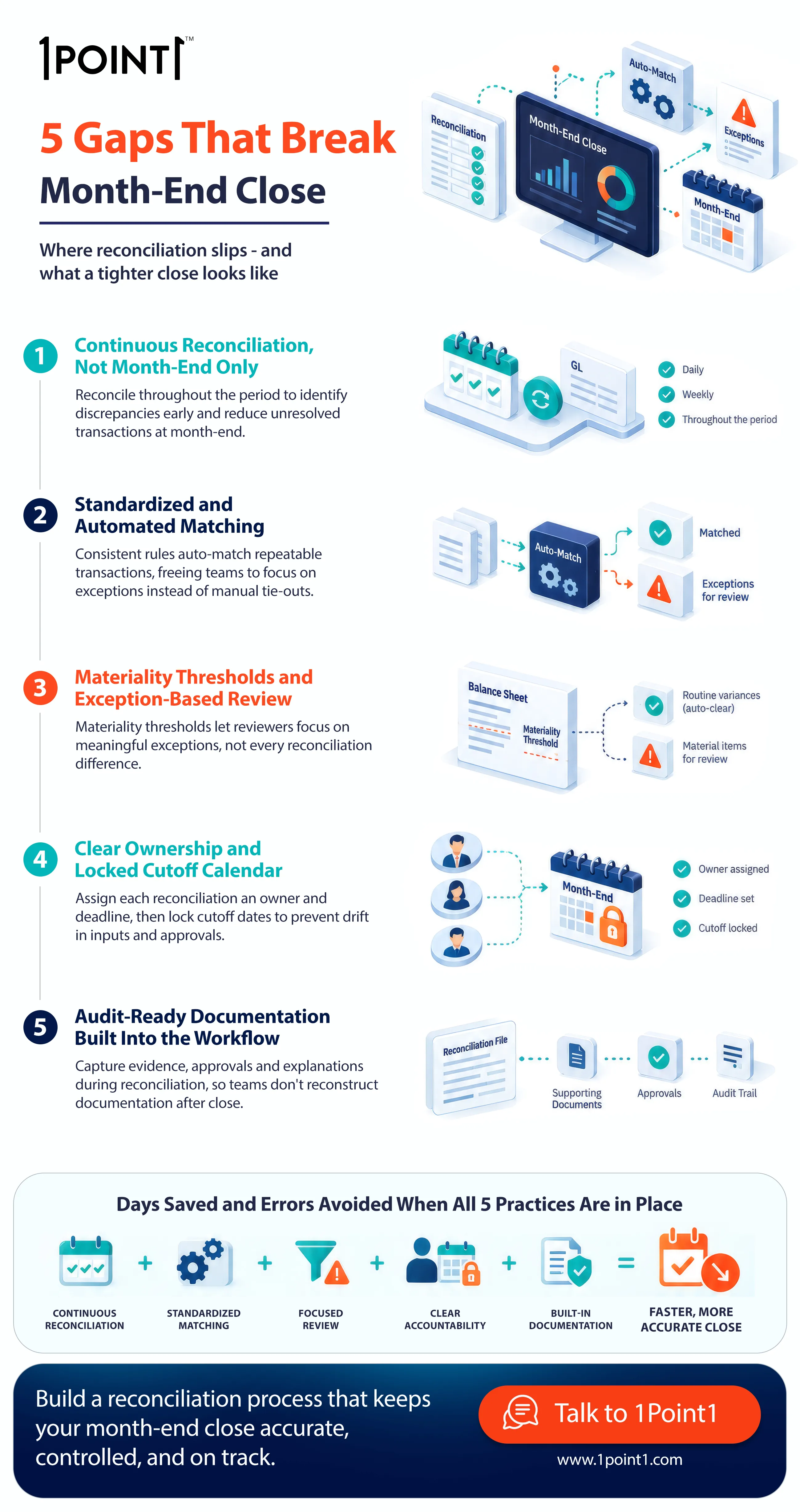
Month-end close becomes difficult when reconciliation work accumulates, exceptions remain unresolved, and ownership is unclear. A tighter process distributes work earlier, automates repeatable matching, and keeps supporting documentation ready. For finance teams using outsourced accounting services, these controls can also improve consistency across the close.
Why Month-End Close Slips Even When Finance Teams Work Overtime
More hours do not fix a fragmented reconciliation process. When teams wait until month-end to investigate mismatches, chase approvals, or gather evidence, outstanding issues concentrate inside an already compressed reporting window. Delays can also affect connected functions such as accounts receivable management and accounts payable outsourcing.
The 5 Reconciliation Practices That Compress the Close
1. Move From Month-End to Continuous Reconciliation
Reconcile throughout the period instead of allowing transactions to accumulate. Earlier review gives teams more time to identify and resolve discrepancies before close begins.
2. Standardize and Automate Transaction Matching
Consistent matching rules reduce repetitive manual tie-outs. Automation can handle rule-based matches while finance teams focus on transactions that require investigation.
3. Apply Materiality Thresholds and Exception-Based Review
Not every variance requires the same level of attention. Defined materiality thresholds help teams prioritize meaningful exceptions rather than spending close cycles reviewing low-impact differences.
4. Assign Clear Ownership and a Locked Cutoff Calendar
Every reconciliation should have a defined owner, deadline, and escalation path. A locked cutoff calendar reduces ambiguity around when inputs, adjustments, and approvals must be completed.
5. Build Audit-Ready Documentation Into the Workflow, Not After It
Supporting evidence should be captured during reconciliation. Keeping approvals, explanations, and documentation with each account reduces the need to reconstruct the audit trail later.
What a Slow, Error-Prone Close Actually Costs the Business
A weak close process creates repeated manual work, delayed reporting, unresolved exceptions, and additional pressure on finance teams. It can also slow financial reporting services when supporting information is incomplete or difficult to validate.
How 1Point1 Runs Reconciliation and Close for Finance Teams
1Point1 brings continuous review, standardized matching, exception management, clear ownership, and documentation into one structured workflow. Its outsourced accounting services approach is designed to reduce avoidable manual effort while improving control across the reporting cycle.
Conclusion
A faster close depends on disciplined reconciliation before month-end arrives. Continuous review, automation, clear thresholds, defined ownership, and built-in documentation create a more controlled path to accurate reporting.
Let’s Connect

FAQs
It means reconciling transactions throughout the period instead of waiting until month-end.
It directs finance teams toward material mismatches that require investigation.
Rule-based matching can reduce repetitive manual tie-outs and isolate exceptions for review.