5 Medical Record Retrieval Best Practices
- Why HIPAA-compliant intake and complete authorizations matter
- How verified provider requests and live tracking keep records moving
- Why completeness and quality checks matter before case review
- How secure delivery and organized records simplify medical record review
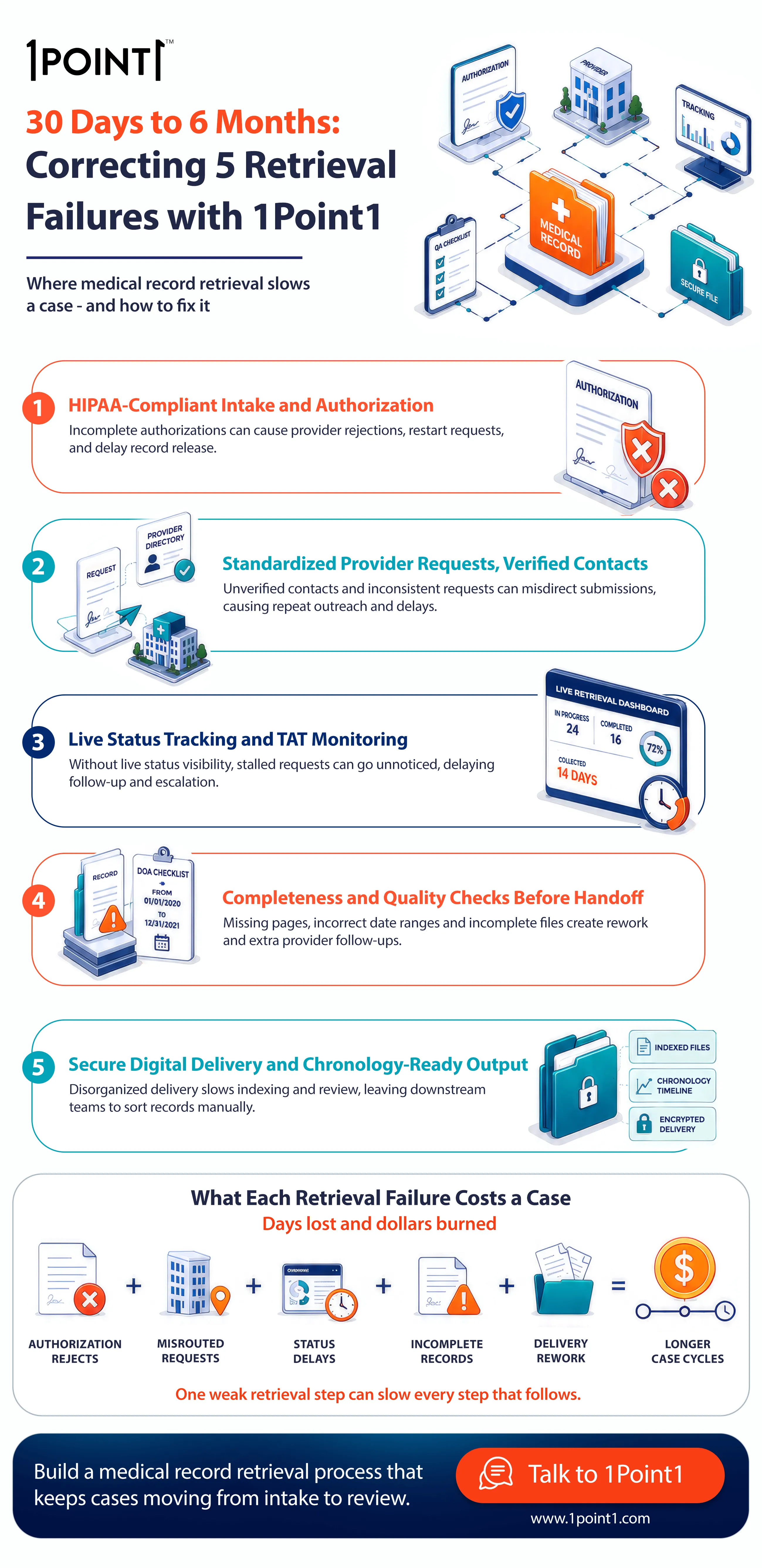
Medical records can shape how quicklylegal, insurance, and independent medical examination teams move a caseforward. Effective medical record retrieval services depend on more thansending requests. They require disciplined authorization handling, accurateprovider outreach, active follow-up, quality control, and secure delivery.
Why Retrieval Speed and Accuracy Decide Whether a Case Stalls
Slow or incomplete retrieval createsdownstream delays. Teams may spend additional time following up with providers,identifying missing records, or reorganizing files before a medical recordreview can begin.
A structured retrieval process reducesthese avoidable handoffs and gives reviewers more complete information from thestart.
The 5 Best Practices That Separate Fast Retrieval From Slow
1. HIPAA-Compliant Intake and Authorization Handling
Confirm that the required authorizationsare complete before initiating requests. Clear intake processes help preventavoidable rework caused by missing or incorrect documentation.
2. Standardized Provider Requests With Verified Contacts
Use consistent request formats andconfirm provider contact details before submission. Reliable recordretrieval solutions depend on requests reaching the correct facility,department, or records custodian.
3. Live Status Tracking and Turnaround Monitoring
Track each request from submissionthrough fulfillment. Visibility into pending, completed, and delayed requestshelps teams identify where follow-up is required instead of discovering gapslater.
4. Completeness and Quality Checks Before Handoff
Receiving a file does not mean retrievalis complete. Records should be checked against the original request so missingdocuments, incorrect patient files, or incomplete date ranges can be identifiedbefore delivery.
5. Secure Digital Delivery, Indexing and Chronology-ReadyOutput
Organized delivery makes retrievedrecords easier to use. Secure digital files, clear indexing, andchronology-ready organization can reduce preparation work before medicalrecord review services begin.
What Poor Retrieval Practices Cost Law Firms, Insurers andIME Teams
Poor retrieval processes can createrepeated follow-ups, fragmented records, additional administrative work, anddelays in review. The result is more time spent managing documents instead ofprogressing the case.
How 1Point1 Runs Medical Record Retrieval End-to-End
An effective end-to-end workflow connectsauthorization, provider verification, tracking, quality checks, and organizeddelivery into one controlled process.
Conclusion
Reliable medical record retrieval comesdown to control at every stage. Standardized requests, active tracking,completeness checks, and organized delivery help reduce avoidable delays andprepare records for efficient downstream review.
Let’s Connect

FAQs
They coordinate the process of requesting, tracking,checking, and delivering medical records for further case or claims work.
It helps identify missing or incorrect records beforethey reach review teams.
It helps requests reach the right records team.