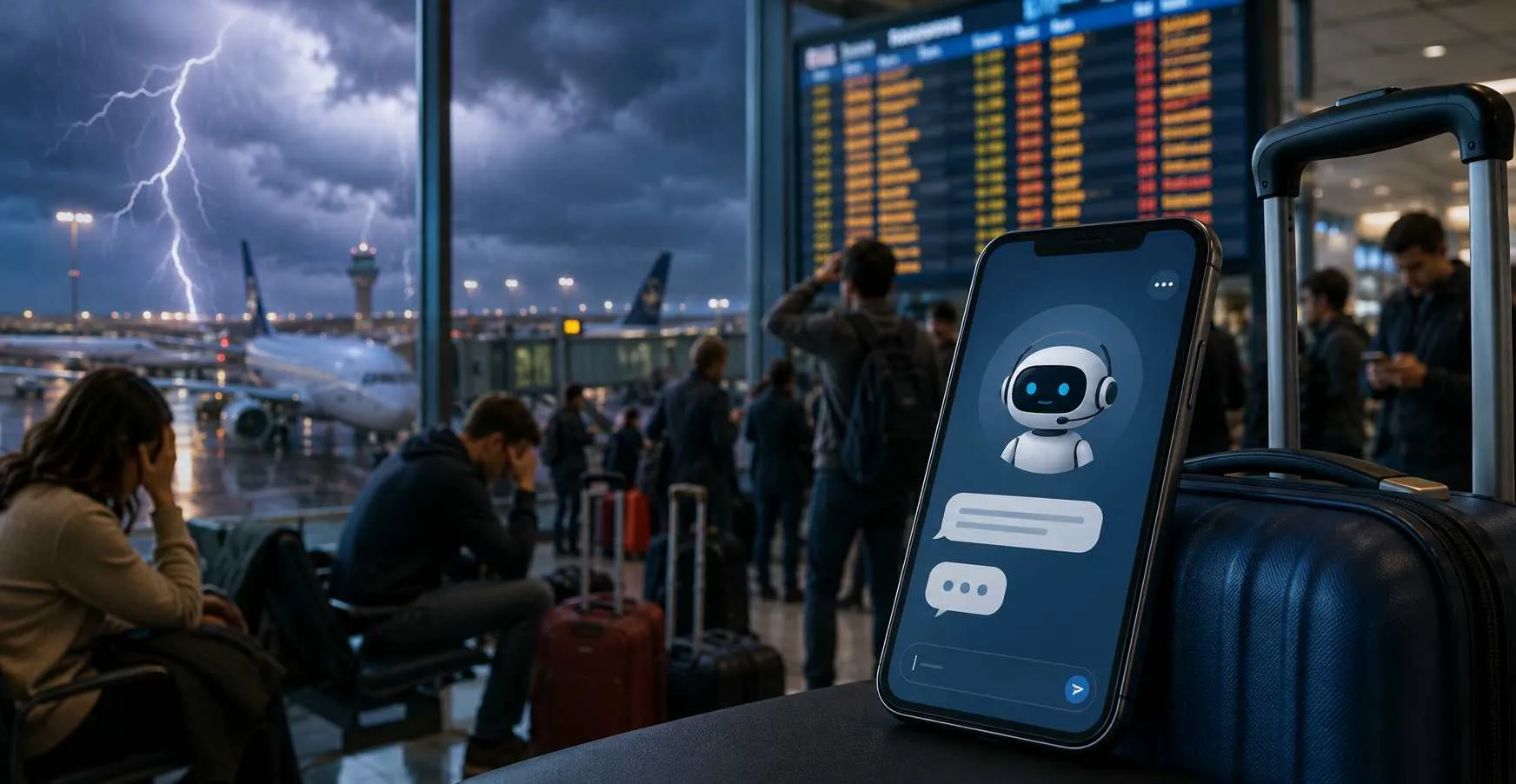
More than 5 billion passengers travel by air each year, according to the International Air Transport Association. A chatbot may handle a routine flight-status question well at 2pm. The real test comes at 8pm, when weather grounds hundreds of flights and thousands of passengers want the same thing: a clear option they can act on. This article examines where Airline Chatbots perform reliably, where they reach their limits and what airlines should test before the next major disruption.
What Airline Chatbots Are Actually Good at in 2026
The everyday work still matters, and Airline Chatbots can carry much of it. Most passengers do not need a super intelligent assistant. They need a quick answer to a small question. That is where these systems can save real agent time. The catch is that the task needs a clear answer, a trusted source and a system that is up to date.
Airline Chatbot Examples in Practice
The useful pattern is to start with a defined passenger need, connect the assistant to the right data and decide in advance when a human should take over. The examples show how airlines are applying conversational systems to defined passenger tasks.
| Airline | Chatbot / Assistant | Primary use |
|---|---|---|
| KLM | BlueBot (BB) | Conversational booking support and voice-led travel help |
| Air France | My Trip Assistant | Personalised baggage answers using the reservation record |
| Lufthansa | Lufthansa Chatbot | Flight irregularity support and self-service rebooking |
| Air India | AI.g | Flight status, baggage, boarding pass support and self-service reaccommodation |
What Happens When a Disruption Hits: Where Chatbots Start to Fail
A disruption changes the job in minutes, and Airline Chatbots feel that pressure first. More passengers arrive, the data keeps moving and the question changes from “what is my flight status?” to “what can you do for me now?” That difference exposes weak links between the chatbot and the airline systems behind it.
Data Silos - When the App Knows and the Chatbot Does Not
Imagine the app says your gate has moved while the chat window still shows the old gate. You do not blame two databases. You blame the airline. The same thing happens with cancellation notices, baggage status and connection information. A single customer journey needs a single, current view of the facts.
Inventory Lock Timing - Rebooking Speed vs Fare Availability Windows
Seats can vanish while a passenger is still talking to the bot. A useful bot needs to see current inventory and know whether a seat can actually be held or issued. Showing a flight that looks available but cannot be booked creates a new problem for the service team.
Fare Class and Ticket Reissuance Limits
Finding a seat is one job. Reissuing the ticket is another. Fare class, ticket status, payment details and partner agreements can all block the final step. During a busy event, Airline Chatbots need the same live facts an agent sees. Anything less turns a simple answer into a broken promise.
Compensation and Passenger Rights - The Air Canada Precedent
The Air Canada case made the risk much easier to understand. In Moffatt v. Air Canada, the British Columbia Civil Resolution Tribunalfound the airline liable after its chatbot gave incorrect information about a bereavement fare. The tribunal awarded CAD 812.02 in total, including CAD 650.88 in damages, C$36.14 in pre-judgment interest and C$125 in tribunal fees.
Emotional Situations Where Chatbots Simply Are Not the Right Answer
A passenger who has spent the night at an airport after a missed connection may not want another menu. A bereaved traveler may want a person. A family traveling with a vulnerable passenger may need someone to take ownership of their own. Automation can still help by collecting facts, but the handoff should happen quickly when the situation calls for care.
The Air Canada Ruling and What It Changed for Airline Chatbot Design
The ruling matters beyond one fare dispute. It puts a sharper line around chatbot governance. If a company puts an assistant on its website, it owns the customer experience around that assistant. That means the airline needs to know what the bot can say, what it can do and when it should stop.
What the Tribunal Actually Ruled
The British Columbia Civil Resolution TribunalheardMoffatt v. Air Canada, 2024 BCCRT 149. The passenger relied on the airline chatbot's explanation of a bereavement fare, bought full-fare tickets and later sought the reduction described by the bot. The tribunal found negligent misrepresentation and ordered C$812.02 in total compensation and fees.
Why Airlines Can No Longer Argue the Bot Acted Independently
That argument is hard to square with how customers see the service. The passenger is on the airline site, using the airline assistant, under the airline brand. They are not performing a legal experiment on whether a piece of software counts as a separate actor. For CX leaders, that means chatbot governance belongs with the wider customer operation, not only with the AI team.
What Guardrails Airlines Have Added Since
The safer pattern is simple. Use approved policy content for high-risk questions. Set hard rules around refunds and compensation. Limit what the model can invent. Log important conversations. Make escalation easy. AI can shape the wording, but the business rules need to remain firm.
What Separates a Chatbot That Holds Up From One That Collapses
The best Airline Chatbots often look boring to the passenger. That is a compliment. The bot knows the booking, knows the live situation and either finishes the job or gets the case to the right person. Behind that calm experience sits a stack of integrations and operating rules.
Shared Customer Data Layer Across App, Web and Chat
A passenger should not type the booking reference three times. The system should carry the booking, recent conversation and disruption context from one channel to the next. That makes the customer journey shorter and the agent handoff cleaner.
Real-Time Integration With PSS, GDS and Operations Systems
A chatbot can be excellent at language and still useless at rebooking if it cannot reach the systems that control seats and tickets. During a disruption, integration depth matters more than polished copy. The bot needs the same operational truth that the airline team relies on.
Deterministic Guardrails on Policy and Compensation Statements
Let generative AI explain a policy in normal language. Do not let it decide the policy. Refunds, compensation, and passenger rights should come from controlled rules or approved sources. The model should make those rules easier to understand, not rewrite them.
Graceful Escalation Path to a Human Agent
A handoff that makes the customer repeat everything is not really a handoff. Pass the transcript, booking details and reason for escalation to the agent. The customer should feel that the case moved forward.
Airline Chatbot Readiness: What Good Looks Like
| Capability | Weak setup | Disruption-ready setup |
|---|---|---|
| Flight data | Stale updates | Live operational data |
| Rebooking | Shows flights but cannot finish | Checks rules and completes valid changes |
| Policy | Free-form answers | Approved sources plus rule checks |
| Escalation | Generic transfer | Agent gets context and reason |
| AI output | Unrestricted generation | Natural language within fixed controls |
The Six Disruption Scenarios Every Airline Chatbot Should Be Stress-Tested Against
Do not test Airline Chatbots only on the happy path. A real airline should break the system on purpose before passengers do. These six situations expose most of the weak spots that matter during a serious disruption.
| Scenario | What Chatbot Should Handle | Where It Must Escalate |
|---|---|---|
| Weather cancellation of a hub airport | Confirm the cancellation, show eligible alternatives and explain the next step. | Unstable inventory, disputed eligibility or exceptions. |
| Mass IT or ground system outage | Share only verified updates and avoid guessing. | Core systems are unavailable or status cannot be verified. |
| Overbooking and denied boarding | Explain the process and standard options. | Compensation disputes, special circumstances or welfare concerns. |
| Missed connection rebooking | Review the itinerary and complete a valid change. | Interline complexity, separate tickets or incomplete journey data. |
| Basic Economy ticket with restricted change rights | Explain the rule and show valid alternatives. | Passenger challenges the rule or requests an exception. |
| Passenger in emotional distress or a vulnerable situation | Provide immediate facts and a clear route to human help. | Bereavement, disability, distress or urgent welfare cases. |
How AI Is Changing What Airline Chatbots Can Do in 2026
The interesting shift for Airline Chatbots is not simply that chatbots sound more human. Plenty of them already do. The bigger change is that AI can now sit closer to the action. It can read the request, check live systems and take a permitted step. That makes the upside larger, and the mistakes more serious.
Agentic AI That Executes Actions, Not Just Answers Questions
An agentic system can check eligible flights, apply business rules and start a valid rebooking flow. That can remove several clicks and reduce agent work. It also changes the testing question. You are no longer checking only whether the bot said the right thing. You are checking whether it changed the booking correctly.
Proactive Disruption Communication Before the Passenger Asks
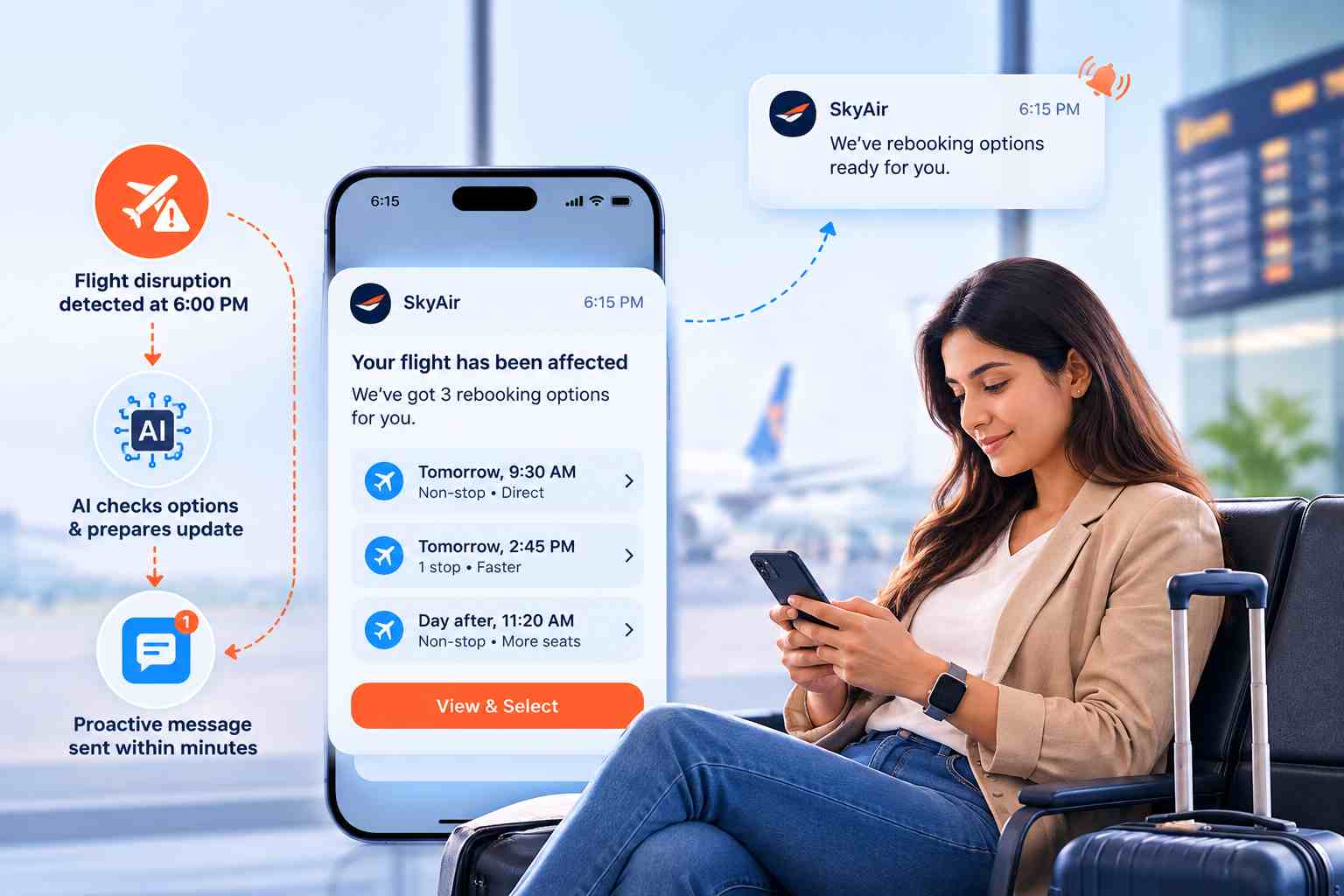
A passenger should not have to open the app to find out what happens next. Suppose a cancellation is confirmed at 6:00pm. Fifteen minutes later, the airline sends an SMS and push notification with three valid rebooking choices and a link to select one. The customer gets a next step before entering the contact queue. That is where AI passenger support becomes useful: the system sees the event, checks the eligible options and sends the information while it still matters.
Sentiment Detection and Escalation Triggers
AI can flag repeated frustration, urgency or language that suggests a case is becoming more serious. Used well, that helps a supervisor spot the conversations that need attention. It is a signal, not a verdict.
GenAI-Drafted Passenger Communication at Scale
During a major disruption, teams may need dozens of versions of the same message. GenAI can make those drafts faster and easier to read. The policy still needs to decide what the airline is allowed to promise. That separation keeps the copy flexible without making the rules fuzzy.
Where the Chatbot Should Hand Off to a Human Agent
The strongest Airline Chatbots are not the ones that automate every moment. More automation is not the same thing as better service. The strongest operation knows the point where a bot should stop. Those points should be designed in advance, with clear triggers and a smooth route to an agent.
Complex Itineraries and Interline Rebooking
Multiple carriers, separate tickets and unusual routing create edge cases quickly. When the system cannot confirm the full chain, an experienced agent should take ownership rather than make a guess.
Compensation Disputes and Regulatory Rights Discussions
A passenger challenge may depend on the ticket, route, cause of disruption and applicable rights. The bot can collect those facts and start the case. The judgement should sit with a trained person.
Distressed, Bereaved or Vulnerable Passengers
There are moments when empathy is part of the service itself. A fast transfer and good context can matter more than another automated answer.
VIP and High-Value Frequent Flyer Situations
Frequent flyers often expect a higher level of ownership when travel goes wrong. The bot can clear routine work, then route the exception to a skilled agent without making the passenger tell the story twice.
The Role of a BPO Partner in Making Airline Chatbots Actually Work
A chatbot is one piece of service operation. The harder work starts around it: training agents, watching failure patterns, handling spikes and fixing the gaps that show up after launch. That is where a strong BPO partner earns its place.
A good operating model gives agents the context behind the bot conversation. It reviews failed intents instead of hiding them. It also plans for the bad days, when contact volume shoots up and the same question arrives thousands of times. This is where Airline conversational AI becomes useful at an operational level rather than as a demo feature.
An AI-first CX model such as the approach 1Point1 brings to customer operations can sit across both sides of that picture. AI handles repeatable work. People handle the exceptions. The value comes from connecting the two, not from pretending one can replace the other.
Conclusion
Airline Chatbots have earned a place in airline CX, but disruption is where the claims get tested. Airline Chatbots can still earn trust only when the service operation behind them keeps pace. A quiet afternoon can hide weak integrations, stale data and awkward escalation. A storm cannot.
The real benchmark for Airline Chatbots is not whether the bot sounds clever. It is whether the passenger gets the right outcome when the plan changes. That takes current customer data, live airline systems, firm policy controls and a human team that can pick up the case without losing the thread.
For airline CX leaders, that is the practical role of an AI-first operation. A model such as 1Point1 can help connect automation, agent support and the wider service layer so the system keeps working when demand spikes and the situation gets messy.
Because better passenger experiences drive better business.