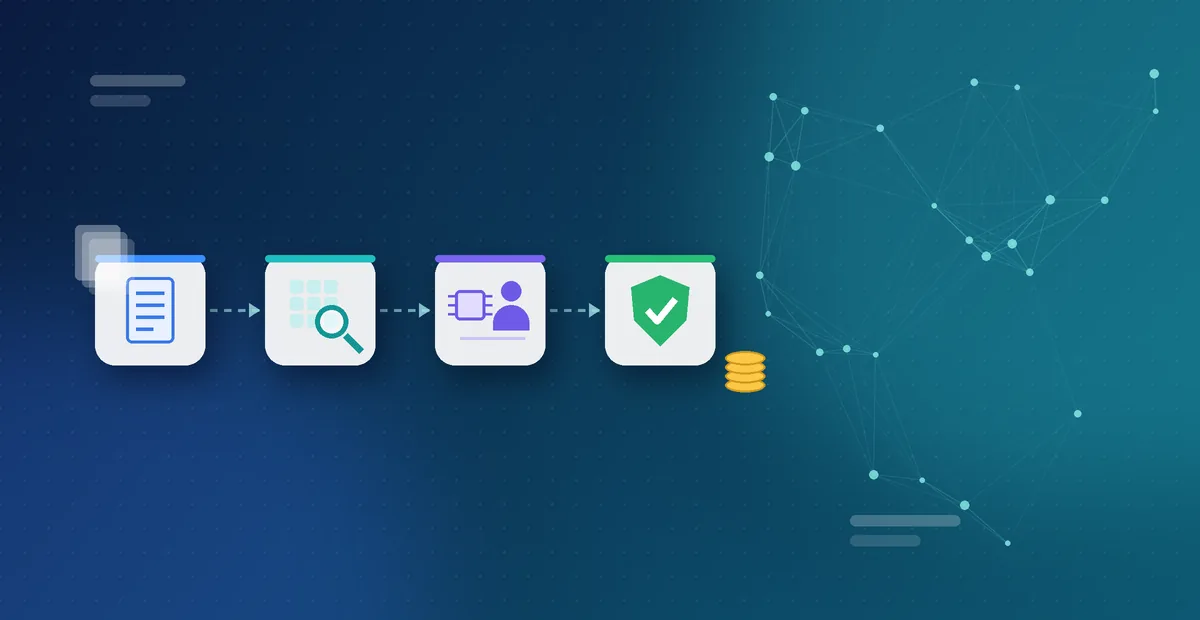
Insurance claims processing outsourcing hands of claim intake, data validation, adjudication support and settlement administration to a specialized BPO partner that combines AI tools with trained staff. It keeps final payout decisions with licensed adjusters while cutting cycle time, lowering cost per claim and tightening compliance documentation industry wide.
Claims is the most expensive, procedure-heavy process in any insurance operation, and the one policyholders judge an insurer by. The global insurance BPO market, which includes claims processing alongside other outsourced insurance operations, was valued at roughly USD 7.5 billion in 2024 and is projected to reach USD 10.9 billion by 2034, a 3.8% CAGR. This is YMYL territory: a mishandled claim affects someone's home, health or livelihood, so every figure below is sourced and every process reflects what licensed adjusters, not vendors, must still decide.
What Claims Processing Outsourcing Covers Across the Claim Lifecycle
First Notice of Loss (FNOL) Intake
FNOL is where a claim begins and where most delay starts. Outsourced FNOL teams staff multilingual, 24/7 intake across phone, chat and app, so a loss gets logged the moment it happens. Digital FNOL submission cuts downstream timelines by roughly 46% versus paper or phone-only intake, since structured data arrives complete the first time.
Data Capture, Validation and Adjudication Support
Once a claim is open, outsourced teams key in supporting documents, cross-check policy terms, flag missing paperwork and prep the file so an adjuster can decide rather than chase information. Intelligent document processing and RPA do the heaviest lifting here, covered below.
Settlement Processing, Subrogation and Claims Follow-Up
After approval, BPO teams handle payment issuance, track subrogation recovery against at-fault third parties, and run follow-up that keeps a file closing instead of sitting idle. Digital payment rails now settle approved claims in under 60 seconds via real-time payment systems, or within three business days via ACH.
What Stays In-House, Final Determinations and Licensed Adjuster Judgment
No credible outsourcing partner makes the final call on a disputed, high-value or litigated claim. Coverage interpretation, reserve-setting, denial decisions and anything requiring a licensed adjuster's signature stay with the carrier.
Why Claims Is the Highest-Value Insurance Process to Outsource
Volume, Procedure-Heaviness and Cost per Claim
Claims processing is repetitive, document-heavy and rule-bound, exactly the profile that benefits most from automation. Without it, per-claim processing costs commonly run USD 15 to USD 22 once labor and rework are counted. With AI-assisted outsourcing, that figure can drop to USD 3 to USD 5. Even administrative steps add up: check issuance alone averages USD 7.78 and can reach USD 20 with mailing and reconciliation.
The Talent and Surge-Capacity Problem (Including Catastrophe Spikes)
Claims volume is not steady. A hurricane or regional flood multiplies incoming claims by a factor insurers cannot staff for year-round. Property claim processing time stretched to 32.4 days in 2025, up from 23.9 days in 2024, and disaster claims averaged 34.2 days, 44% longer than standard claims. A BPO partner with cross-trained surge capacity absorbs that spike without a hire-then-layoff cycle.
Where Leakage and Slow Turnaround Hurt Both Cost and CX
Slow claims cost money twice: in loss adjustment expense, and in customer churn. Automated systems that validate coverage and estimates correctly eliminate 3% to 8% of total incurred losses that would otherwise leak out through overpayment or coverage errors.
How AI and Automation Actually Speed Settlements
Intelligent Document Processing for Claim Forms (UB-04, CMS-1500, ACORD)
IDP tools read standardized forms, UB-04 and CMS-1500 for health claims, ACORD for property and casualty, extracting field data without a human re-typing it. In one case, IDP and OCR cut per-document time from 15 minutes to 5 minutes and lifted classification accuracy to 98%, while overall accuracy rose from 98.9% to 99.95% .
RPA for Data Entry, Routing and Status Updates
RPA handles the repetitive middle of the claim, moving data between systems and pushing status updates without a human touching every record. Manual data entry workload dropped by 70% in the case study above.
Agentic AI for Policy-vs-Estimate Cross-Referencing and Anomaly Flags
Agentic AI goes further than extraction, comparing a submitted estimate or medical bill against the policy's coverage terms and flagging mismatches for review. Computer vision models for damage estimation return repair costs within 12% to 18% accuracy of the final invoice, close enough to triage but not to replace sign-off.
The Human-in-the-Loop Model for Complex and Disputed Claims
Every credible AI claims workflow routes ambiguous, high-value or disputed claims to a trained human reviewer instead of auto-approving them. AI flags the risk; a trained analyst makes the final call on anything borderline.
The Accuracy and Compliance Story That Separates Serious Providers
100% AI Quality Review vs 10-20% Sampling
Traditional BPO quality control relied on supervisors spot-checking 10% to 20% of closed files. AI-based review checks every single file against policy rules and documentation completeness, a major reason accuracy improved to the 98% to 99.95% range cited above.
Litigation-Grade Documentation From FNOL Onward
A claim file that might end up in dispute needs a clean, timestamped audit trail from the first call forward, not a narrative reconstructed later. Automated FNOL and adjudication platforms generate that trail automatically, supporting the carrier's position if a settlement is challenged.
Fair-Claims-Settlement and Regulatory Alignment
Every claims outsourcing arrangement operates within the carrier's regulatory obligations. The key requirements and their applications in claims processing are summarized below.
Fraud Detection as Part of Claims Processing
Pattern Recognition and Suspicious-Claim Flagging
Insurance fraud is not a rounding error. The Coalition Against Insurance Fraud estimates it costs the industry USD 308.6 billion a year, with property and casualty alone accounting for roughly USD 45 billion. Machine learning models flag unusual patterns, duplicate claimants, inflated estimates and mismatched timelines faster than a manual review queue.
How Human Investigation and AI Detection Work Together
AI narrows the pool, people investigate it. Capacity is the real bottleneck: a single investigator typically manages over 200 open fraud cases, and a full manual investigation runs 14 or more days. 1Point1's fraud and scam detection work follows this structure, where AI flags high-risk activity in real time and trained analysts make the final call, maintaining over 90% accuracy in scam identification.
Balancing Fraud Control With Legitimate-Claimant Experience
Overly aggressive fraud filters punish honest policyholders with delays and extra document requests. Fraud systems combining AI scoring with human review achieve roughly 35% better detection while cutting false positives by 18%, catching more fraud while slowing fewer legitimate claims.
The Settlement-Speed and Cost Gains, With Realistic Numbers
Turnaround-Time Reduction (Weeks to Days)
Documented case studies show cycle time falling from roughly 10 days to under 48 hours after AI-assisted outsourcing. Qualifying low-complexity claims can close in 8 to 60 minutes end to end once they pass automated validation.
Cost per Claim as Volume Scales
Cost per claim falls as automation share rises, from the USD 15 to USD 22 manual range to USD 3 to USD 5, and one documented engagement reported a 30% reduction in operating costs without adding headcount.
The 90%+ Data-Accuracy Benchmark
Across the sources reviewed here, 90%+ data accuracy is the baseline credible providers should demonstrate, with top performers reporting 99.5% or higher in specific document and claim categories. Ask for that number broken out by claim type, not as one blended figure.
How Claims Outsourcing Improves the Policyholder Experience
Real-Time Status Visibility and Proactive Updates
Policyholders increasingly expect the same tracking experience they get from a parcel delivery app. RPA-triggered status updates push claim milestones automatically, cutting the "where is my claim" call volume that otherwise clogs contact centers.
24/7 Multichannel Claim Support
Claims do not happen on business hours. Outsourced support staffed across multichannel support as phone, chat and portal around the clock means FNOL gets logged immediately after a loss, not the next morning.
Faster Payouts and Fewer Reopened Claims
Faster, more accurate first-pass adjudication reduces the rework that comes from reopened claims. When documentation is validated completely the first time, fewer claims bounce back for missing information, exactly what straight-through processing is designed to eliminate for qualifying volume.
Security and Compliance in Insurance Claims BPO
Handling Sensitive PII/PHI and Financial Data
Claims files routinely contain Social Security numbers, medical records, bank details and home addresses. Any partner touching that data needs encryption at rest and in transit, plus strict access controls and logging.
SOC 2 / ISO 27001, HIPAA (Health Claims) and Data Residency
1Point1's BFSI operations run on ISO/IEC 27001-certified infrastructure and comply with PCI DSS 4.0, GDPR, RBI guidelines, SOX, FDCPA and AML frameworks. The company also holds SOC 2 Type 2, HIPAA, ISO/IEC 42001 and GDPR certifications more broadly.
Vendor Risk and Audit Readiness
Carriers are on the hook for their vendors' security postures. Real-time compliance dashboards with automated audit trails let a carrier answer a regulator's question about any claim without reconstructing the file by hand.
What to Evaluate in a Claims Processing Outsourcing Partner
Line-of-Business Depth (P&C, Health, Life)
P&C, health and life claims run on different forms, regulations and adjudication logic. A partner should show specific experience across the lines a carrier actually writes.
AI + Human Delivery Model and Accuracy Track Record
Ask for the accuracy number by claim type and whether quality review covers 100% of files or a sample. That gap, 10-20% sampling versus 100% AI-assisted review, changes how much leakage actually gets caught before settlement.
Surge Readiness for Catastrophe Volumes
Disaster claims already run 44% longer than standard claims, so ask how a partner staffs for a sudden spike, cross-trained reassignment and a documented playbook, not hope.
Documentation Standards and Compliance Certifications
Request the actual certificates, SOC 2 Type 2, ISO/IEC 27001, HIPAA attestation where relevant, rather than a marketing claim of "bank-grade security."
Why 1Point1 for Insurance Claims Processing Outsourcing
1Point1 supports the full claims lifecycle from first notice of loss through settlement, combining empathetic customer communication with accurate, policy-compliant processing across life, health and general insurance lines. Its agentic AI resolves roughly 60% of standard queries automatically, including policy inquiries and documentation checks, freeing agents for complex, disputed cases. On fraud, 1Point1 runs a human-in-the-loop model where AI flags high-risk activity in real time and trained analysts confirm borderline cases, maintaining over 90% accuracy in scam identification. 1Point1's SOC 2 Type 2 and ISO 27001-certified infrastructure support secure claims processing operations. With 9 global offices and 5,000-plus employees, 1Point1 processes 200 million-plus transactions annually for 70-plus clients, scale that matters during catastrophe surges.
Conclusion
Claims processing outsourcing has moved past simple labor arbitrage. The providers worth hiring pair AI document processing, agentic cross-referencing and fraud detection with human adjusters who keep final authority over every settlement. The numbers back the shift: cost per claim falling from USD 15-22 to USD 3-5, cycle time compressing from weeks to under 48 hours, and accuracy climbing toward 99%+ when review covers every file instead of a 10-20% sample. None of that works without compliance built in from FNOL onward, so the real evaluation question is not whether a partner uses AI, but whether it can prove the certifications, the accuracy numbers and the human-in-the-loop model behind the claim.