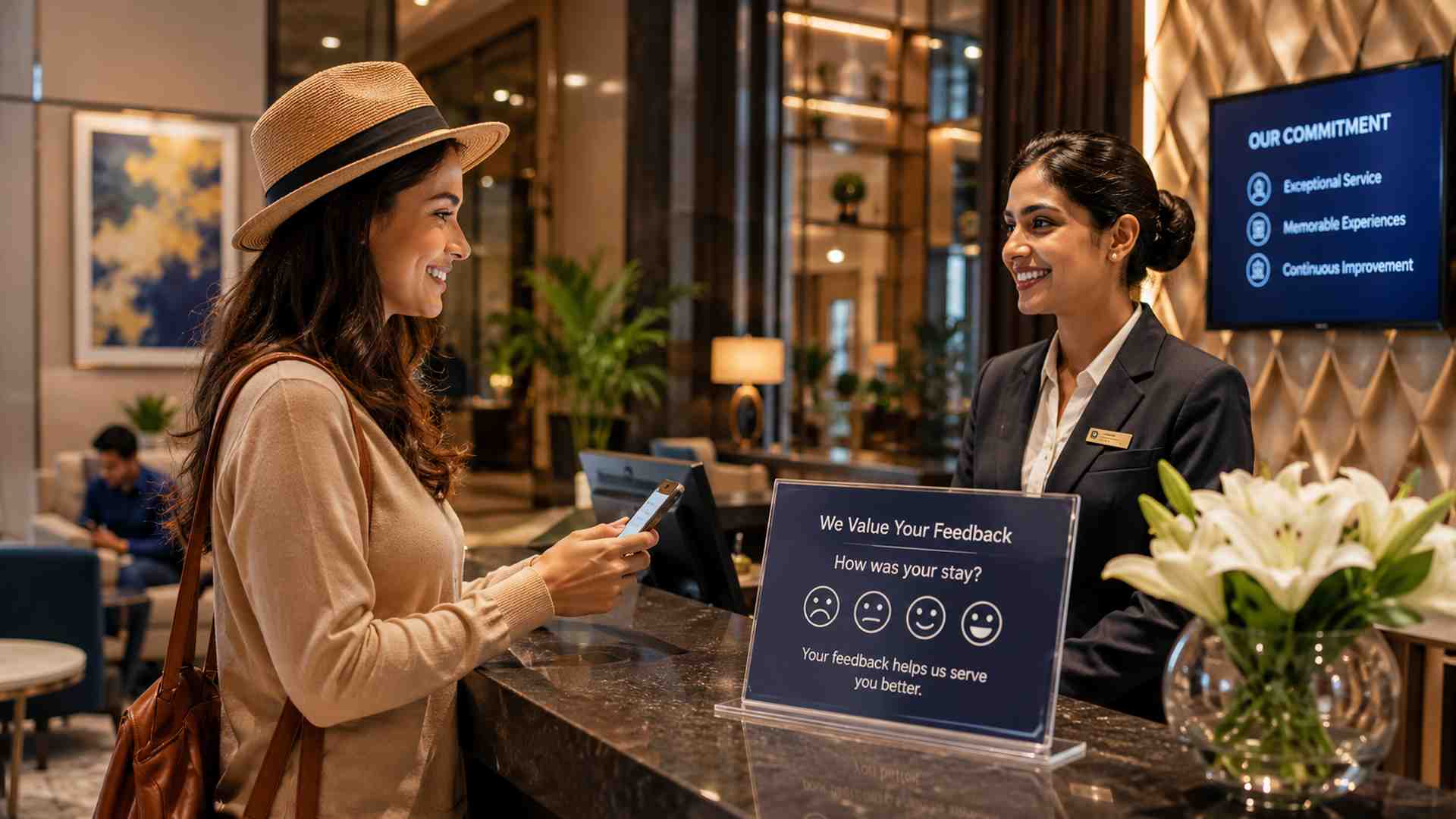
Every hotel collects feedback. Not every hotel does anything useful with it.
That gap between collecting and acting is where most hospitality brands lose the guests, they worked hard to win. A guest fills out a post-stay survey, gives three stars, and mentions the room was cold and the check-in took twenty minutes. The survey goes to a database. Nobody reads it before that guest books their next trip with a competitor.
This is not a data problem. It is a process problem. And it is more common than the industry likes to admit.
Why Guest Feedback Is the Most Underused Asset in Hospitality
86% of hoteliers consider guest reviews to be very important. Most hospitality brands will tell you the same thing if you ask them. Feedback matters. Guests' opinions shape the business. Everyone is listening.
But listening and acting are different things. 57% of customers will switch to a competitor after just a single bad experience. That means every piece of feedback a brand collects but fails to act on is a missed opportunity to keep someone who already chose them.
The reason feedback goes unused is rarely intentional. It is structural. Feedback comes in through too many channels, gets stored in too many places, and never reaches the people who could actually do something about it. A front desk manager does not see the survey response from last Tuesday. A housekeeping team does not know that three guests this month complained about the same thing. The data exists. The connection between the data and the decision does not.
Companies identified as customer experience leaders outperform the market and generate a higher return than the average S&P 500 Index by thirty-five per cent. Companies that are CX laggards trail by 45%.That is a 90%-point difference driven largely by how seriously a brand takes what its customers are telling it.
Where Hospitality Brands Are Already Collecting Feedback
Most hotels and hospitality businesses are not struggling to find feedback. They are drowning in it, coming from multiple places simultaneously, in different formats, with different levels of usefulness.
In-Stay Surveys and Real-Time Feedback Channels
The most valuable feedback is the kind a brand receives while the guest is still on the property. If a guest mentions through a mid-stay survey that their room has a maintenance issue, that problem can be fixed before checkout. If the same guest mentions it in a post-stay review, all the brands can do is apologise publicly.
For validity and authenticity, surveys should be simple, unobtrusive, and easy to complete. A good example is offering a short, one-question interception survey at a key point along the guest's journey. In-stay feedback does not need to be elaborate. A tablet at the restaurant asking, "How was your meal today?" A QR code in the room linking to a two-question survey. The simpler it is to respond, the more responses come in, and the faster issues can be addressed while they still matter.
Post-Stay Reviews and Third-Party Platforms
Post-stay reviews on Google, TripAdvisor, Booking.com, and similar platforms are where most brands focus most of their feedback attention. And for good reason.
48% of guests consider online reviews the main factor in choosing a hotel. A brand's review profile is effectively its front window for every potential guest who has not yet stayed. But post-stay reviews also have a timing problem. By the time a guest writes about their experience on TripAdvisor, they have already left. The opportunity to fix the problem in the moment is gone. The opportunity to prevent the same problem for the next guest is what remains.
Direct Feedback Through Support Interactions
Every call to the front desk, every message to the concierge, every complaint handled by a support team is feedback. It just rarely gets treated that way.
Letting customers know their opinions matter by sharing updates on changes made and keeping the conversation open creates a culture of care and sharpens the ability to deliver exceptional customer service. Support interactions are some of the richest feedback a hospitality brand can access because they are direct, specific, and often urgent. Treating them as data points rather than isolated incidents is one of the simplest ways to start building a meaningful picture of what is actually going wrong.
The Feedback to Action Gap Most Hospitality Brands Have
Here is what the feedback-to-action gap looks like in practice.
A hotel receives three hundred post-stay surveys a month. One person reads them, writes a summary, and shares it in a monthly management meeting. By the time any action is discussed, the guests who gave the feedback have already moved on. The feedback is weeks old. The staff members involved in the incidents may not even be working the same shifts. Nothing changes.
This is not a hypothetical. It is the standard operating model for a significant portion of the hospitality industry.
Modern tools allow hoteliers to uncover the signals that hint at loyalty, including booking behaviours, feedback patterns, and sentiment hidden within reviews. The more effectively these patterns are interpreted, the easier it becomes to craft pricing, promotions, and experiences that elevate the property above commoditisation. The pattern recognition is what most brands are missing. Individual pieces of feedback look like isolated incidents. Aggregated over time and analysed for patterns, they reveal systemic issues that no amount of individual service recovery will solve.
Closing the feedback-to-action gap requires three things: speed, routing, and accountability. Feedback needs to reach the right team quickly, be assigned to someone responsible for acting on it, and be tracked to ensure it is addressed. Without all three, feedback is just noise.
How to Turn Guest Feedback into Operational Improvements
Routing Feedback to the Right Teams in Real Time
The most common failure in hospitality feedback management is centralisation without distribution. All the feedback goes to one place, and nobody outside that place ever sees it.
Once patterns and repeat comments are noticed, the team should be trained to fix common issues, processes and menus should be adjusted based on what guests say, and technology should be used to track improvements and spot new problems early. For this to work, feedback needs to be routed to the teams who can act on it. A complaint about room cleanliness needs to reach housekeeping, not just the general manager. A comment about slow breakfast service needs to reach the F&B team before the next morning's service, not after the next management meeting.
Real-time routing is not technically complex. It requires clear rules: which types of feedback go to which teams, what counts as urgent, and who is responsible for following up.
Service Recovery Triggered by Post-Stay Signals
Service recovery is the practice of reaching out to a dissatisfied guest before they have the chance to broadcast their frustration publicly. It requires speed.
A professional, courteous response to negative reviews can turn a dissatisfied guest into a repeat visitor while showing potential guests that the brand cares. Engaging with guest feedback not only demonstrates excellent customer service but also enhances guest loyalty. But the more powerful version of this is not responding to a negative review after it is posted. It is identifying the dissatisfied guest from their post-stay survey score and contacting them directly before they write the review at all.
A guest who gave a three-star score and mentioned a specific issue is a guest worth calling. A short, genuine outreach acknowledging what went wrong and offering something that makes it right changes the probability of a negative review being posted and the probability of a return visit.
Using Feedback Patterns to Fix Systemic Issues
Individual complaints are easy to dismiss. Patterns are not.
When ten guests in a month mention the shower pressure in the east wing, that is not ten separate incidents. That is one maintenance issue that has affected ten guests who all mentioned it. When fifteen guests over three months describe the check-in experience as slow and unwelcoming, that is not a staffing anomaly. That is a process problem.
Conducting a customer experience survey to understand what is driving bad travel experiences, then walking in the shoes of customers to understand what they need to feel guided, cared for, and confident, allows brands to take the time to read online reviews across platforms and get an authentic sense of guest experience. Pattern analysis is what separates brands that fix the same problem repeatedly from brands that fix it once and stop hearing about it.
How AI Is Changing the Way Hotels Analyse Guest Feedback
The volume of feedback a hospitality brand receives today is too large to process manually at the speed it needs to be processed. A property with two hundred rooms might receive hundreds of reviews, survey responses, and support interactions in a week. Reading them all, categorising them, spotting the patterns, and routing the relevant ones to the right teams is not a job that scales with a human team alone.
AI-powered guest feedback analysis changes this in a few specific ways.
Sentiment analysis tools can read a review and determine not just whether it is positive or negative, but also which aspects of the experience drove that sentiment. A review that says "the room was lovely but the service at breakfast was quite frustrating" is not just a three-star review. It is a positive signal about rooms and a negative signal about F&B, both of which need to reach different teams.
Volume analysis makes patterns visible faster. AI can surface the fact that twelve guests mentioned check-in wait times this month, three more than last month, before any manager would have spotted the trend manually.
CRM and analytics in hospitality settings, when combined with POS data, provide a clear picture of what customers want, revealing what is working, what is not, and enabling fast fixes. This allows brands to know their guests better and create offers or experiences that matter to them. The practical effect is that hotels acting on AI-analysed feedback are making decisions based on complete data rather than the fraction of feedback their teams have time to read.
The Link Between Acting on Feedback and Repeat Bookings
Acting on feedback is not just good practice. It is directly connected to revenue.
Properties with an average rating of 4.5 or above received 3.7 times more direct website traffic than those with ratings under 4.0. Responding to at least 75 per cent of reviews resulted in a 22 per cent increase in repeat bookings. That second number is the one worth sitting with. A 22% increase in repeat bookings from the relatively simple act of responding to reviews consistently. Not from a loyalty programme redesign. Not from a major renovation. From engagement with feedback.
The connection makes sense when you think about it from the guest's perspective. A guest who leaves feedback and sees a genuine response from the property feels heard. A guest who feels heard is more likely to give the property another chance. A guest who books a second stay and has a good experience is far more likely to become a loyal customer than one who never returned after their first stay.
Companies that focus on customer experience see up to an 80% increase in revenue. The feedback loop is not separate from the business case. It is part of it.
How Outsourced CX Teams Help Hospitality Brands Close the Loop Faster
Most hospitality operations are not short on feedback. They are short on the capacity to process it quickly, route it correctly, and follow up before the opportunity is lost.
Outsourced CX teams that specialise in hospitality feedback management add operational speed that internal teams often cannot match. Specialist team monitoring feedback across all channels, flagging urgent issues, routing complaints to the right departments, and managing post-stay outreach does not need to be built from scratch or trained on hospitality standards. The capability already exists.
The practical benefit is closing time. The gap between a guest submitting a low-satisfaction survey and someone from the property reaching out to address it shrinks from days to hours. The gap between a negative review going live and a thoughtful public response appearing beneath it shrinks from days to same day. Both of those timing improvements have direct effects on the probability of retaining the guest and on the reputation signal the property sends to future guests reading those exchanges.
Follow-up surveys should be designed to maintain communication and connection with guests and to measure customer experience and brand loyalty. Surveys should be relevant to the customer, not take up too much of their time, because guests are giving the gift of feedback, and it is the brand's responsibility to use that feedback to continue to improve their experience and the experience of other customers. Outsourced teams that take this seriously treat every piece of feedback as exactly that: a gift worth acting on.