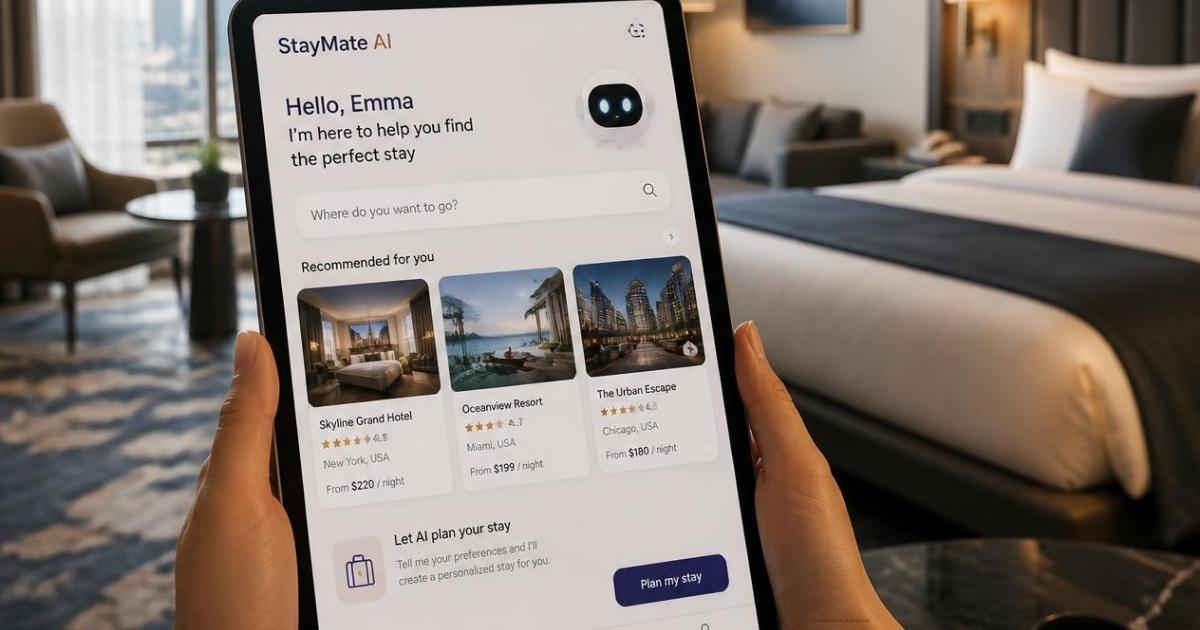
Walk into any revenue manager's office in 2026 and you will hear the same complaint. Pricing is set once, sometimes twice a week, and by the time anyone notices a dip in bookings, the window to fix it has already closed. A festival fills up the hotel down the street while yours sits at 60% occupancy on the same dates. A slow Tuesday goes unsold because nobody had time to drop the rate by 10% that morning.
This is not a staffing problem. It is a speed problem. And it is exactly what AI-powered dynamic pricing was built to solve.
Why Static Pricing Is Costing Hotels Revenue Every Night
Static pricing means setting a rate and leaving it untouched regardless of market conditions. Manual pricing typically results in one or two pricing changes a day, while automated dynamic pricing makes 30 to 40 adjustments daily. That gap represents a 95% difference in how often a hotel actually responds to real demand.
The cost shows up in the numbers. Hotels relying on manual pricing leave 10 to 15% of potential revenue on the table every year . For a property generating 1 million dollars in annual room revenue, that is 100,000 to 150,000 dollars in lost profit annually, simply because pricings were not adjusted fast enough.
There is also a hidden labor cost. A 25-room independent hotel managing prices across six channels spends roughly two hours a day on manual rate checks, adding up to more than 700 hours and close to 18,000 dollars in labor a year . Even with that effort, the rates remain reactive rather than predictive.
What Dynamic Pricing Actually Means for Hotel Revenue Teams
Dynamic pricing adjusts room pricing in real time based on demand, occupancy, competitor pricing and booking pace. Instead of charging the same amount for a quiet Tuesday in February as a Saturday during a local festival, the system reads what is actually happening in the market and prices accordingly.
The mechanics are simple even if the math behind them is not. When demand rises, pricing rise with it. When bookings slow down, pricing ease to attract last minute travellers before the room goes unsold. Done well, a strong dynamic pricing strategy lifts hotel revenue by 10 to 25% compared to static pricing models .
This is not a new idea borrowed from nowhere. Airlines have used this exact logic since the 1980s. Hotels adapted it through yield management in the 1990s, and what has changed since is the technology available to act on it instantly rather than once a week.
How AI Changes the Way Hotels Set Room Pricing
The difference between a basic rules-based system and a true AI pricing engine comes down to how much data it can process and how fast it can act on it.
Demand Forecasting Across Seasons and Local Events
AI systems do not just look at last year's calendar. They pull in booking pace, cancellation patterns, search volume, flight data and even weather to project demand weeks or months ahead . A concert announced six weeks out, a citywide conference, even a sudden spike in flight searches into the nearest airport; all of these get factored into the forecast before a human would normally notice the signal.
Major demand shocks make this especially visible. Lighthouse data shows average nightly pricings can spike by as much as 32% year over year during large scale events like the Olympics or major concerts . Hotels without a system watching these signals miss the window to capture that uplift.
Competitor Rate Tracking in Real Time
Modern pricing tools track pricing across dozens or even hundreds of comparable properties at once. PriceLabs, for example, allows hotels to monitor pricing trends across up to 350 nearby properties and refresh that data continuously rather than checking competitor websites one at a time . When a nearby property drops its rate ahead of a slow weekend, an AI system notices immediately. A revenue manager checking manually might notice days later, after the booking window has already passed.
Personalized Pricing by Guest Segment and Channel
Not every guest responds to the price the same way. Business travelers tend to tolerate only modest rate movement, typically 5 to 15%, and respond better to steady midweek pricing and length of stay incentives. Leisure travelers are far more elastic, often accepting swings of 20 to 40% around weekends or events . AI systems can apply different pricing logic to each segment and each channel simultaneously, something that is nearly impossible to do manually with any consistency.
Where AI Pricing Delivers the Clearest Revenue Gains
The numbers across independent research are consistent enough to take seriously. McKinsey found that hotels using AI driven revenue management report a 17% increase in total revenue and a 10% boost in occupancy compared to properties that do not . Separate analysis shows AI powered dynamic pricing can lift average daily rate by 10 to 15%, while AI driven group displacement decisions have pushed group revenue up by close to 19% in some portfolios .
Independent hotels are seeing similar results. Among properties that adopted AI pricing tools, 25.5% saw revenue increase between 6 and 10%, and another 35% reported gains between 11 and 20% . Nearly 70% of operators surveyed now view AI as essential to staying competitive, not optional.
Ancillary revenue benefits too. Bundling length of stay incentives with dining, spa or parking offers can lift total guest value by 15 to 40%, since guests staying longer naturally spend more across the property .
What Revenue Teams Get Wrong When Adopting Dynamic Pricing
The most common mistake is chasing 100% occupancy. A full hotel at a low rate often means more guests to serve, more rooms to turn over and more operational cost, while earning less profit per room than a slightly emptier hotel at a smarter rate . Full occupancy also removes any flexibility to capture last minute high demand bookings, since there is nothing left to sell.
The second mistake is setting prices once a month and walking away. Demand does not wait for a monthly review cycle, and a property that only revisits pricing every few weeks will consistently leave money on the table between updates .
The third mistake and perhaps the most damaging long term, is treating AI as a replacement for judgment rather than a tool that informs it. Hotels seeing the strongest results are not the ones that automate blindly. They are the ones where the system handles repetitive analysis while revenue managers focus on strategy, negotiation and the decisions that genuinely need a human perspective .
How Revenue Capture Reveals the Real Gap in Your Pricing
Most hotels track occupancy and average daily rate, but the metric that shows how well a pricing strategy is performing is revenue capture. It is calculated as actual room revenue plus ancillary spend, divided by the potential revenue available at optimal price. . A well-run pricing program typically captures 80 to 90% of available revenue on high performing nights. Anything below that range suggests room pricing is not keeping up with actual demand, even if occupancy appears healthy on paper.
This is also where the industry baseline becomes useful in context. RevPAR growth across the sector in 2026 sits at a modest 0.6%, while hotels running dynamic pricing consistently outperform that figure by a wide margin . In a market growing this slowly overall, the hotels pulling ahead are doing so almost entirely through smarter pricing rather than any broader demand tailwind.
Tracking revenue capture also catches problems early. If a property notices a shortfall two weeks before a major local event, there is still time to adjust pricing upward and recover the gap. Hotels that only review performance after the fact lose that window entirely, which is one more reason real time monitoring matters more than monthly reporting.
The Shift From Automation to Collaborative Pricing
Early dynamic pricing tools were sold on the promise of full automation. Set a few rules, let the system run and stop thinking about pricing altogether. That promise never fully landed, particularly with independent operators who were reasonably cautious about handing over pricing decisions to a system they could not see inside .
What is gaining traction instead is a more collaborative model, where the system learns from how a revenue manager actually makes decisions and adapts its recommendations over time rather than overriding human judgment outright. This matters because adoption tends to fail not from a lack of technical capability but from change management. Revenue managers who fear being replaced, or who struggle to trust a system they do not understand, will quietly work around it rather than rely on it .
The hotels seeing the strongest results tend to follow a similar pattern during rollout. They start with a pilot on a portion of their inventory rather than switching everything over at once. They keep their team informed about what the system is doing and why, rather than treating it as a black box. And they build in regular review points, weekly for real time adjustments, monthly for strategy and quarterly for a fuller reset, so pricing logic does not quietly drift out of step with the market .
This is also why staff training is consistently flagged as the difference between AI tools that get used and ones that get ignored. A revenue management system is only as effective as the team's willingness to trust its output, and that trust is built through visibility into how the recommendations are generated rather than blind faith in the technology.
What Hotels Should Evaluate Before Adopting AI Pricing Tools
Before signing up for any pricing platform, a few questions are worth asking directly.
Does the system integrate with your existing property management system and channel manager. Pricing recommendations are only useful if they sync automatically across every booking channel, since rate parity issues create their own revenue leakage.
How many comparable properties does it track and how often does that data refresh. A tool checking ten competitors once a day is a different product from one tracking hundreds in real time.
Does it allow you to set floor and ceiling pricing? Full automation without guardrails can expose a hotel to pricing that protects neither margins nor brand positioning during unpredictable demand swings.
What does onboard and ongoing support look like. Nearly 90% of properties now use some form of AI driven pricing , so the differentiator is no longer whether a hotel uses AI, but how well the system is configured and maintained.
Conclusion
The gap between hotels using AI driven dynamic pricing and those still pricing manually is no longer marginal. It shows up as 17% more total revenue, 10 to 15% higher average daily price and tens of thousands of dollars in recovered labor and bookings every year. The technology has moved past the experimental phase, and hotels still relying on weekly rate reviews are quietly losing ground every night a room sells at the wrong price.
Revenue teams do not need to become data scientists to benefit. They need a system that handles repetitive analysis faster than any person can, freeing them to focus on the judgment calls that actually require a human in the room.
Ready to stop leaving revenue on the table? 1Point1 helps hotel revenue teams build smarter, faster pricing operations powered by AI and backed by real expertise. Get in touch to see how a more responsive pricing strategy can fill more rooms at the right rate, every night.